
Dinner cleanup does not have to mean a sink full of dishes, sticky counters, and a long evening spent scrubbing. With a few practical habits, you can reduce the mess before cooking even begins and make the final cleanup much quicker.
The goal is not to keep your kitchen perfectly spotless while preparing a meal. Instead, focus on using fewer items, cleaning in small steps, and creating an easy routine that works for your household.
Start With a Quick Kitchen Reset
Before you begin cooking, take a minute to clear the counters and empty the dishwasher or dish rack. A clean starting point gives dirty dishes somewhere to go and creates more room for meal preparation.
Put away items that do not belong in the kitchen, wipe away old spills, and place a trash can or compost container nearby. This small reset can prevent clutter from building up during cooking.
You can also gather the tools and ingredients you expect to use. When everything is ready, you are less likely to open several cabinets, use duplicate tools, or leave packages scattered across the counter.
Plan Meals With Cleanup in Mind
Some meals naturally create less mess than others. When you are tired or short on time, choose recipes that use one pan, one pot, or a sheet pan.
Useful options include:
– Sheet-pan vegetables and chicken
– One-pot pasta
– Rice bowls
– Stir-fries
– Baked casseroles
– Slow cooker meals
– Sandwiches with a simple side dish
This does not mean every meal needs to be cooked in one container. It simply helps to balance more involved recipes with easier options throughout the week.
Before choosing a recipe, look at the number of bowls, pans, and utensils required. If two recipes sound equally appealing, the one with fewer dishes may be the better choice for a busy evening.
Use Fewer Cooking Tools
It is easy to reach for a new spoon, knife, or bowl each time you prepare an ingredient. Instead, try to reuse tools whenever it is safe and practical.
For example, use one cutting board for several vegetables before moving on to ingredients that require separate handling. Measure several dry ingredients into the same bowl, or place ingredients directly into the pan when the recipe allows it.
A large bowl can often serve multiple purposes during meal preparation. It might hold washed produce, collect scraps, or mix ingredients before cooking. Keeping one multipurpose bowl nearby can reduce the number of containers you use.
Avoid setting every possible tool on the counter. Start with the basics and add items only when needed.
Clean While Food Cooks
Cooking often includes short waiting periods. Use those minutes to make progress on cleanup.
While water boils, vegetables roast, or a dish simmers, you can:
– Put ingredients back in the pantry
– Rinse measuring cups and spoons
– Wipe the counter
– Load the dishwasher
– Wash a cutting board
– Empty food scraps
– Soak a pan that has stuck-on food
Try to avoid starting a large cleaning project while food is unattended. Stay close enough to monitor the meal, and choose quick tasks that can be paused easily.
Cleaning as you go also makes the final cleanup feel less overwhelming. By the time dinner is ready, many of the tools may already be washed and put away.
Make Soaking a Habit
Dried food is much easier to remove when it is softened soon after cooking. As soon as a pan, bowl, or utensil is no longer needed, fill it with warm water and a little dish soap.
Let the item soak while you eat. This is especially useful for pots with rice, oatmeal, sauces, melted cheese, or baked-on residue.
For large pans, add enough water to cover the stuck areas. Avoid overfilling containers, and handle hot cookware carefully. After soaking, most residue should come away with less scrubbing.
If you have a dishwasher, check whether the item is dishwasher-safe before loading it. Some cookware and kitchen tools need to be washed by hand.
Use Liners and Protective Barriers
A few simple barriers can make cleanup faster. Parchment paper, foil, or reusable baking mats can help protect sheet pans and baking dishes from spills and sticky ingredients.
Use these items when they suit the recipe and the cookware. A liner should fit safely and should not come into contact with heating elements or open flames.
You can also place a tray under dishes that might bubble over in the oven. This protects the oven floor and makes spills easier to manage. For countertop work, a washable mat or cutting board can help contain crumbs and drips.
The best option depends on the task. Reusable products create less waste over time, while disposable liners can be convenient for especially messy meals.
Set Up a Clear Dish Routine
A simple dish routine helps everyone know what to do after eating. Decide where plates, cups, utensils, and cookware should go.
For example:
- Scrape leftover food into the trash or compost.
- Rinse items when needed.
- Place dishwasher-safe dishes in the dishwasher.
- Put hand-wash items near the sink.
- Wipe the table and counters.
- Run the dishwasher or wash the remaining dishes.
If several people live in your home, divide the tasks. One person can clear the table while another loads the dishwasher. Someone else can wipe surfaces or sweep the floor.
Sharing the work makes cleanup faster and keeps it from becoming one person’s responsibility every night.
Keep Cleaning Supplies Within Reach
Store everyday cleaning supplies where you use them. Keep dish soap, a sponge or brush, and clean towels near the sink. Store surface cleaner and cloths in a nearby location.
A small container can hold brushes, scrapers, and other frequently used tools. This keeps the sink area organized and prevents you from searching through cabinets during cleanup.
Replace worn sponges and wash reusable cloths regularly. Clean tools make cleanup more pleasant and help prevent unpleasant odors.
Make the Last Five Minutes Count
After the dishes are handled, spend a few minutes finishing the kitchen. Wipe the counters, clean the stovetop, check the floor for crumbs, and return items to their usual places.
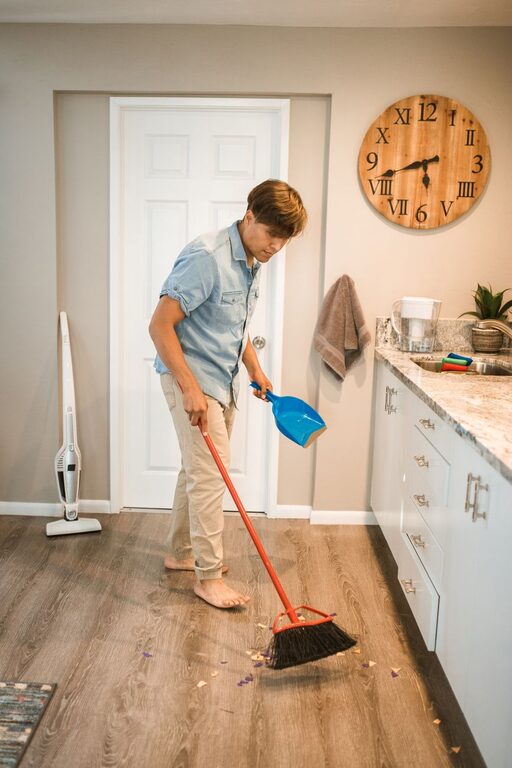
Do not overlook small spills. A fresh spill is usually easier to wipe than one that dries overnight. If the floor needs more attention, sweep the busiest areas first instead of trying to clean every corner immediately.
A quick final check also prepares the kitchen for the next morning. Waking up to a clear counter and empty sink can make the whole day start more smoothly.
Create a Routine That Fits Your Home
The most effective cleanup routine is one you can repeat. You do not need a complicated system or a perfectly organized kitchen. Start with one or two changes, such as soaking pans immediately or cleaning while food cooks.
After a week, notice what saves the most time. You may find that meal planning, fewer cooking tools, or shared responsibilities makes the biggest difference.
Dinner cleanup becomes easier when it is treated as a series of small actions rather than one large chore. With a little preparation and a consistent routine, you can finish the evening with a cleaner kitchen and more time to relax.